
Robert is a photographer who grew up in Essex and now lives in Ironbridge, Shropshire. He graduated in Film & Photographic Arts in 1983 from The Polytechnic of Central London (now Westminster University). His final year’s project was exhibited at the Tricycle Gallery, as part of a project, Education Matters in 1984.
He has spent 35 years in the cycle industry both at the craft level making bespoke hand-built bicycles and at the corporate level working for a major international bicycle company.
Robert returned to photography between 2006 and 2011 teaching at a Further Education college across A-level (photography), B-Tec (Forensic photography) and adult education programmes (analogue and digital photography). During this time he also worked as a freelance photographer on editorial assignments for music publications, theatre productions, photo libraries, cycling events and an NGO in India. Robert was also commissioned as lead photographer by the Science Museum for a project called
Biker Tribes.
He is currently engaged in a long term project documenting and exploring sustainability issues and the cultural heritage of crafts people and small manufacturers for the Heritage Crafts Association alongside his MA studies at Falmouth.
Bentall Edge Woods
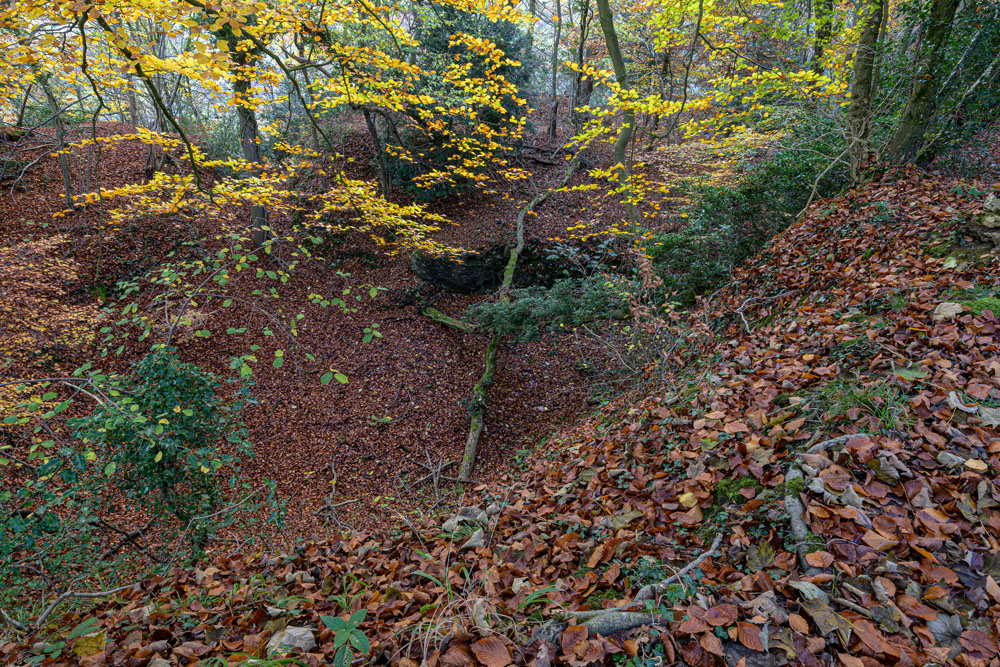
Untitled 1, 2025
Giclée print, mounted on board, 42 x 30cm
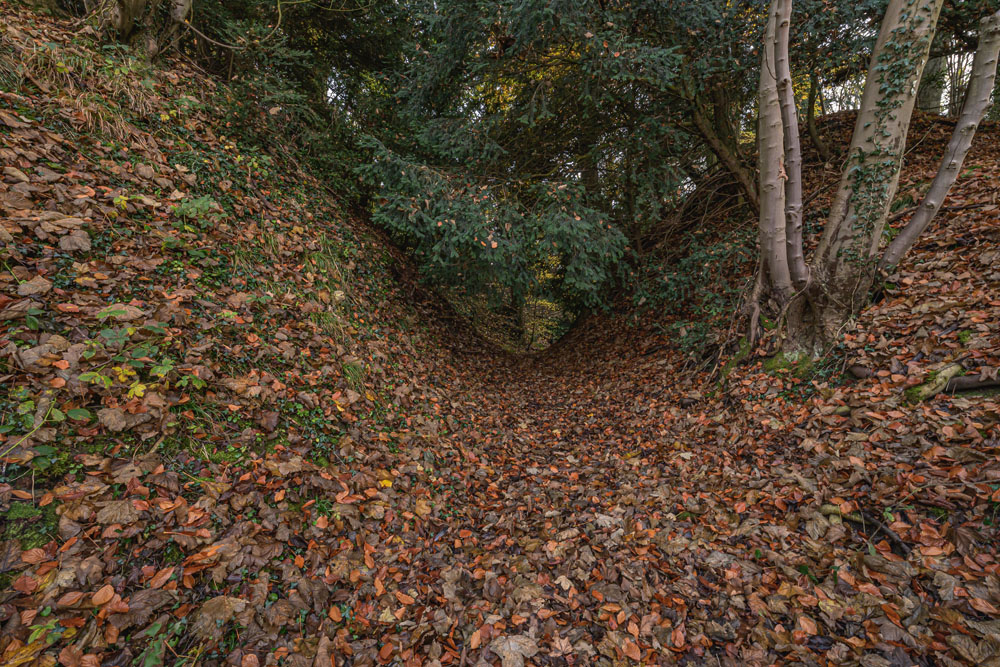
Untitled 2, 2025
Giclée print, mounted on board, 42 x 30cm
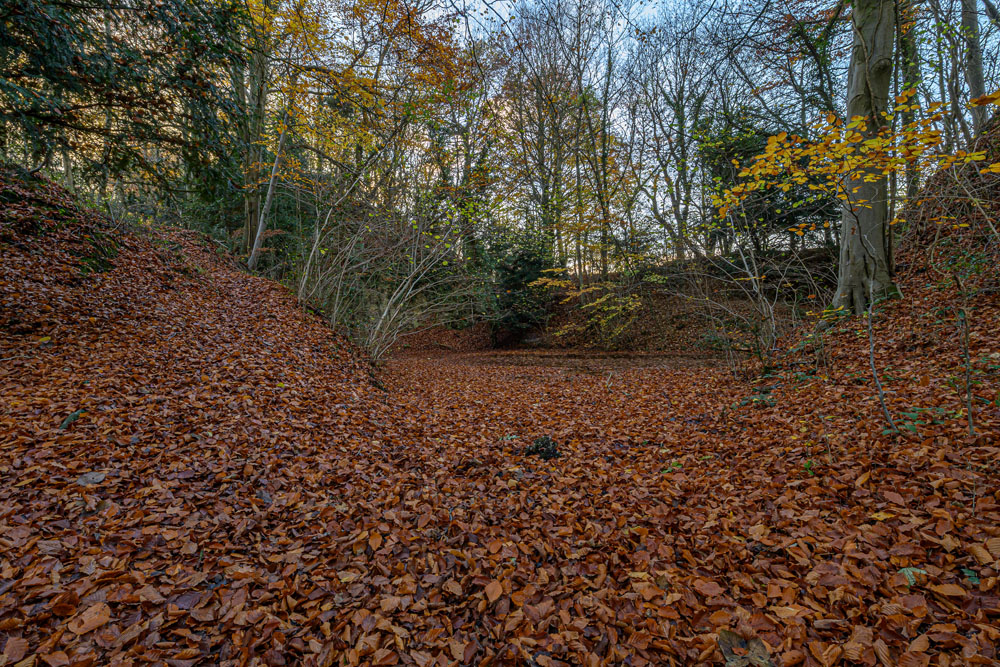
Untitled 3, 2025
Giclée print, mounted on board, 42 x 30cm
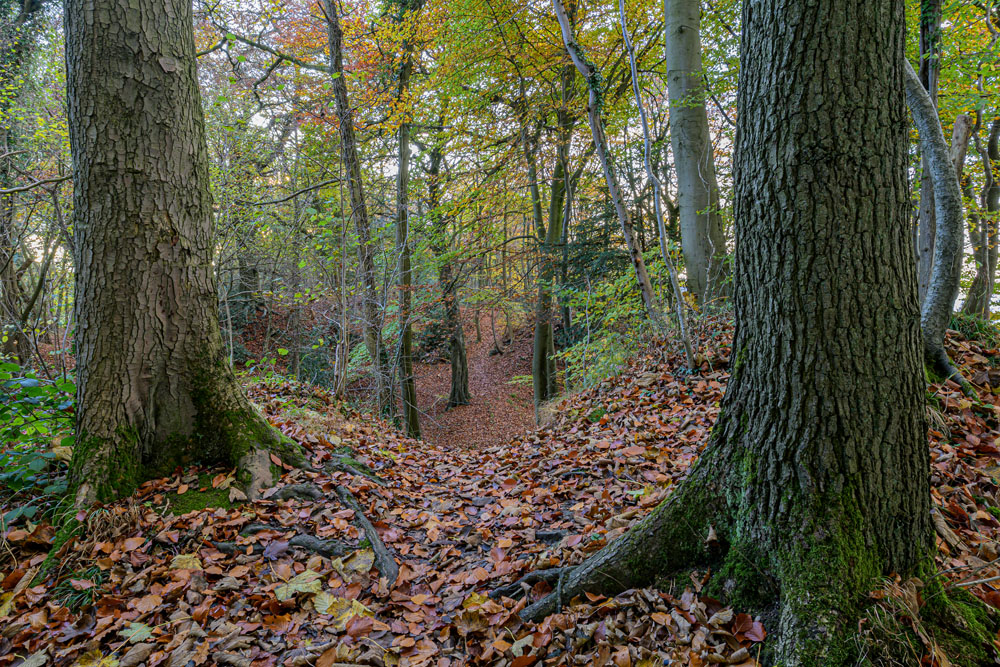
Untitled 4, 2025
Giclée print, mounted on board, 42 x 30cm
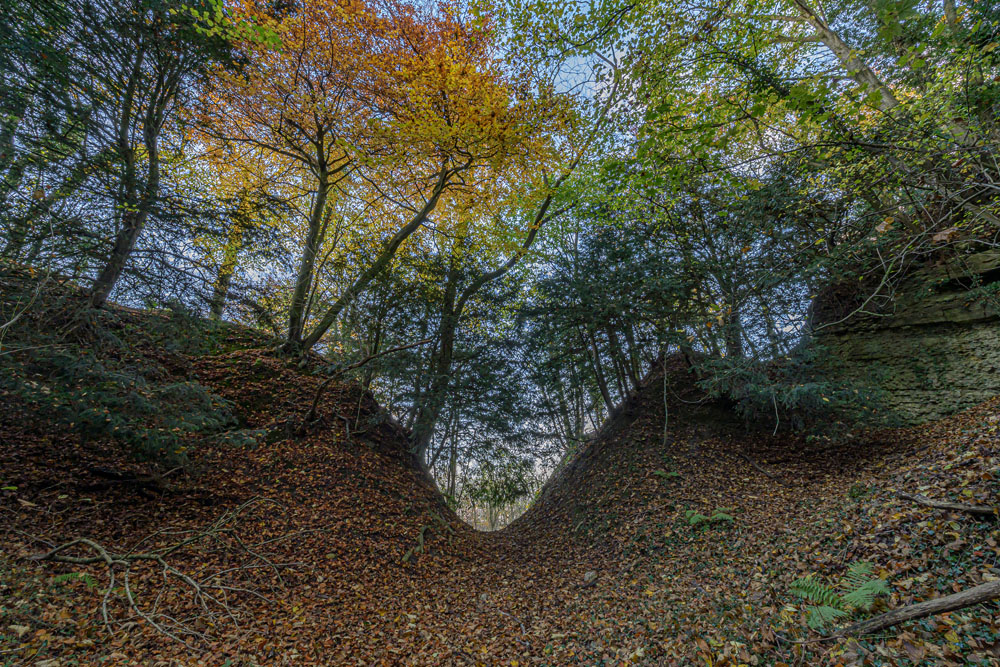
Untitled 5, 2025
Giclée print, mounted on board, 42 x 30cm
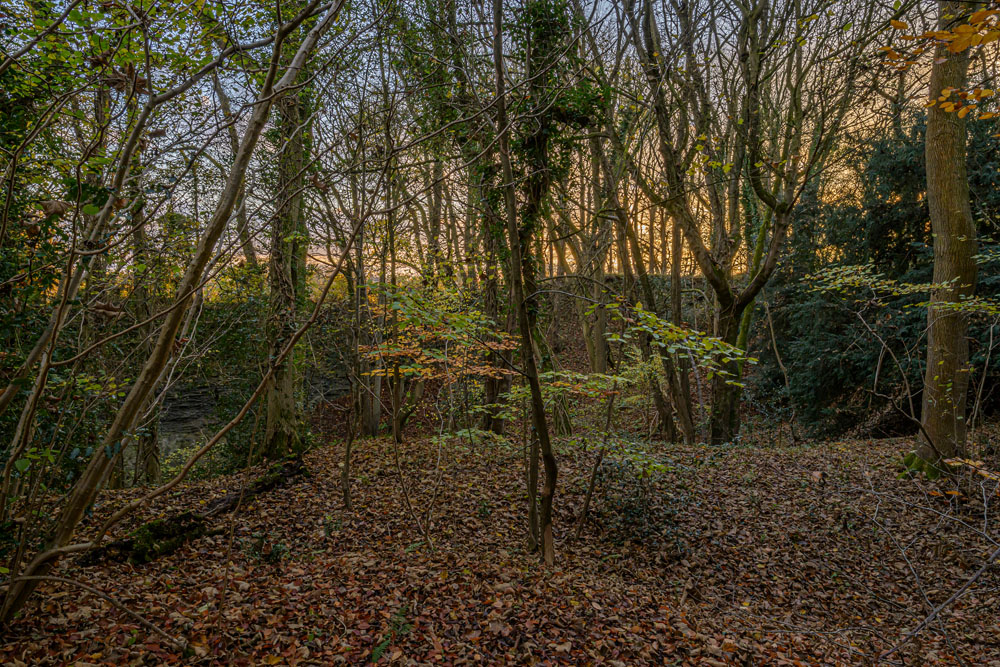
Untitled 6, 2025
Giclée print, mounted on board, 42 x 30cm
Benthall Edge has been a worked landscape for nearly 750 years and is now a tree-covered slope and a Site of Special Scientific Interest. It is partly within the UNESCO World Heritage Site of Ironbridge, Shropshire, the birthplace of the Industrial Revolution. It is estimated that 1.2 million cubic metres of limestone have been removed from an area of just under 1 square kilometre , leaving a patchwork of quarries and spoil heaps now overgrown by trees. It has been criss-crossed in time by numerous paths, tracks, tramways and inclined planes, with many of these meandering paths remaining.
Local folklore has a tale of the tragic death of a young woman in the 19th Century, who mistakenly walked off of a path into a deep pool covered in leaves, being dragged down by her heavy skirts to drown. This gave the Red Pool located on the Edge its name.
A description of Benthall Edge written c1839 includes a drawing of an exaggerated, beautiful and Italianate styled view of the hillside and mentions that it was “a favourite promenade for the lovers of the picturesque”. The only history referred to was the defunct Buildwas monastery and kings and castles that were connected with forming the ‘English countryside’ seen in the distance. The many quarries and lime-burning kilns in operation on the Edge at that time, were obviously ignored in the 19th Century aesthetic pursuit of escaping the social and visual consequences of the Industrial Revolution.
I am intrigued by the history, narratives, practices and the ideological assumptions of the notions of both landscape and the English countryside and how these have changed over time. I wanted to explore how the language, conventions and the ‘photographic vision’ of landscape may be used to entice viewers to question and challenge these assumptions and narratives, and if it is possible to reveal the social and environmental history a landscape has witnessed.
Robert Wade
November 2024